There’s nothing quite as disappointing as a meticulously prepared salad, vibrant with fresh ingredients, only to find it ruined by soggy lettuce. You know the feeling – that watery residue at the bottom of the bowl, diluting your delicious dressing and turning crisp greens into a limp, unappetizing mess. But what if there was a simple, elegant solution to banish soggy salads forever and elevate your culinary creations to a new level of freshness? That’s where the Best Salad Spinner comes in, transforming your kitchen prep and ensuring every bite is perfectly crisp and flavorful.
The Undeniable Benefits of a Top-Tier Salad Spinner
A salad spinner might seem like just another kitchen gadget, but its impact on your daily cooking and healthy eating habits is profound. It’s more than just a convenience; it’s an essential tool for anyone serious about fresh, vibrant meals.
Crisper Salads, Better Flavor
The primary magic of a good salad spinner lies in its ability to thoroughly remove excess water from your leafy greens. Centrifugal force gently but effectively spins away moisture, leaving your lettuce, spinach, and herbs perfectly dry. This dryness is crucial because it allows your salad dressings to cling beautifully to each leaf, rather than sliding off or getting watered down. The result? A salad that’s bursting with flavor and delightful texture in every single bite.
Time-Saving Efficiency
Imagine preparing a large family salad or meal-prepping for the week without the endless patting down of greens with paper towels. A quality salad spinner dramatically cuts down prep time. In mere seconds, it accomplishes what would otherwise be a tedious, messy chore, freeing you up to focus on other aspects of your meal. It’s a genuine game-changer for busy households and meal planners alike.
Healthier Habits, Less Waste
Using a salad spinner encourages more frequent consumption of fresh produce. Knowing you can quickly and easily clean and dry your greens makes you more likely to incorporate them into your daily diet. Furthermore, properly dried greens last significantly longer in the refrigerator, reducing food waste and ensuring your produce stays fresh and usable for days. As culinary expert Chef Julianne Dubois often says, “A dry green is a happy green, and a happy green leads to a healthy plate and a happy chef!”
From Humble Beginnings: The Evolution of the Salad Spinner
While the concept of drying greens isn’t new, the modern salad spinner we know and love today is a relatively recent invention. Devices designed to wash, drain, and spin salad have existed since the 19th century. However, the mechanism-operated spinner truly took shape in the early 1970s.
French inventor Jean Mantelet, founder of the kitchenware company Moulinex, filed a patent for a “Salad Dryer” in 1971. Soon after, another French innovator, Gilberte Fouineteau, is credited with patenting the design that forms the foundation of contemporary salad spinners in 1973. His key improvement was a removable basket and the absence of a central post, making it far more user-friendly. When introduced to the American market in 1974 by Mouli Manufacturing Co., it initially faced skepticism, labeled as “another gourmet gadget.” However, with the rise of healthy eating trends in the late 1970s, the salad spinner quickly became a kitchen staple, proving its enduring value.
Anatomy of Excellence: What Makes the Best Salad Spinner Tick?
Understanding the components of a salad spinner helps you appreciate its function and evaluate what makes certain models superior.
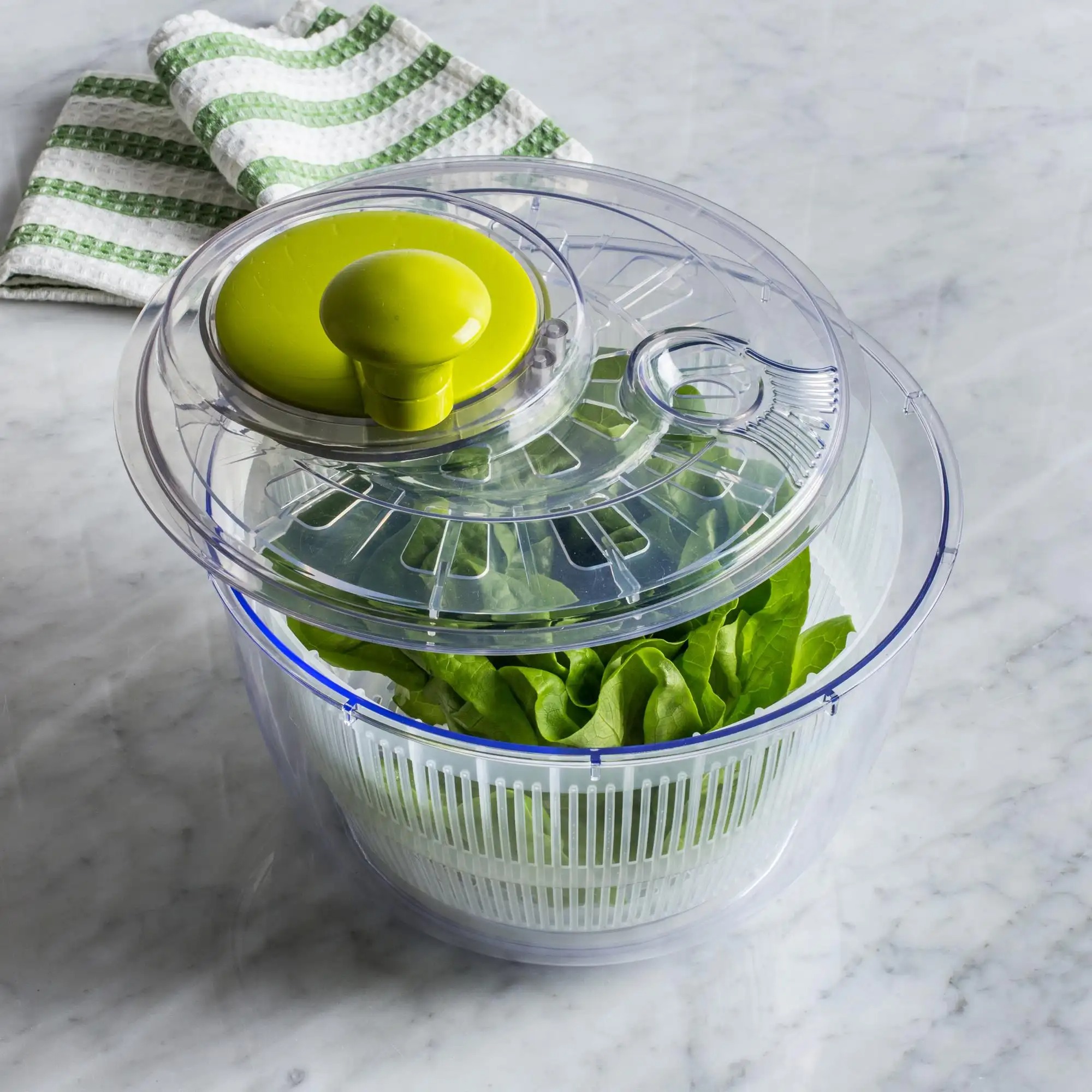
At its core, a salad spinner consists of three main parts:
- The Outer Bowl: This catches the water spun off the greens and often doubles as a serving bowl.
- The Inner Colander/Basket: This is where you place your greens. It has holes to allow water to escape.
- The Lid with Spinning Mechanism: This is the brains of the operation, housing the gears or cords that make the inner basket spin.
The spinning mechanism itself typically comes in a few styles:
- Pump-Action: Often considered the most ergonomic and efficient, a pump-action spinner usually features a large button that you push down to activate the spinning. Many can be operated with one hand and include a brake button for quick stops.
- Crank Handle: These models feature a handle on the lid that you turn manually. They can be quieter but generally require two hands to operate.
- Pull-Cord: Similar to a lawnmower, you pull a cord to initiate the spin. While simple, these can sometimes be less durable, with the cord being a potential point of failure.
Materials also play a significant role in performance and versatility:
- Plastic: Lightweight, affordable, and often found in various colors. While durable, some plastic bowls might not be as aesthetically pleasing for serving.
- Stainless Steel: Offers superior durability, won’t absorb odors or stains, and looks sleek enough to go straight from prep to table. Stainless steel models are typically more expensive.
- Glass: Combines functionality with elegance. A glass outer bowl can double beautifully as a serving dish and allows you to visually monitor the drying process. However, it’s heavier and more prone to breakage if not handled with care.
Thoughtful design features, such as a non-slip base, a convenient pour spout for draining water without removing the lid, and collapsible designs for compact storage, further enhance the user experience.
Choosing Your Perfect Match: Key Factors for the Best Salad Spinner
Finding the best salad spinner for your kitchen depends on your specific needs and habits. Consider these factors when making your choice:
Size and Capacity
The ideal size is crucial. A smaller, 2-3 quart spinner is perfect for individual portions, small side salads, or drying fresh herbs. For families, entertaining guests, or if you frequently prepare large main course salads and larger quantities of vegetables, a 4-6 quart (or larger) model is much more practical. Remember that while a larger spinner offers versatility for big batches, it can also efficiently dry smaller amounts; too small an amount in a very large spinner, however, might not generate enough momentum.
Mechanism Type
Your preference for spin action will greatly influence your experience. Pump-action models are often celebrated for their ease of use and one-handed operation, making them a favorite for quick prep. Crank models offer a smooth, controlled spin and can be quieter, though they typically require both hands. Pull-cord spinners are simple but might not provide the same drying power or long-term durability as their pump or crank counterparts.
Material Matters
Decide what you prioritize:
- For budget-friendliness and lightness, plastic is an excellent choice.
- If durability, aesthetic appeal, and versatility (doubling as a serving bowl) are important, stainless steel or glass options are worth the investment. They also prevent staining and odor absorption that can sometimes occur with plastic over time.
Ease of Cleaning and Storage
The best salad spinner should be as easy to clean as it is to use. Look for models with lids that can be easily disassembled, allowing you to thoroughly clean all components and prevent moisture or food particles from getting trapped (which can lead to mold). Dishwasher-safe parts are a huge bonus for hassle-free maintenance. For kitchens with limited space, consider collapsible designs or those with flat-locking pump mechanisms that reduce overall height for compact storage.
Mastering Your Salad Spinner: Tips for Optimal Use
Getting the most out of your salad spinner goes beyond just spinning. A few simple techniques can ensure your greens are not just dry, but truly clean and vibrant.
The “Deep Clean” Rinse Technique
Many users make the mistake of rinsing greens directly in the colander basket under running water. This can compress the greens, trapping dirt. Instead, for a truly clean result:
- Separate the Components: Remove the inner colander from the outer bowl.
- Soak Your Greens: Fill the outer bowl with cold water and submerge your greens, allowing them to float freely. Swish them around gently with your hands. This lets dirt, sand, and even tiny critters settle to the bottom of the bowl.
- Transfer & Spin: Carefully lift the greens from the water, leaving any settled debris behind, and place them into the inner colander. Discard the dirty water from the outer bowl.
- Spin Away! Place the colander back into the clean outer bowl, secure the lid, and spin until your greens are dry. For very dirty produce, you might repeat the soaking step with fresh water.
Loading for Success
Achieving optimal dryness is all about balance. Don’t overload your spinner; a basket that’s too full won’t allow enough airflow or proper centrifugal force, leaving you with damp spots. Conversely, a very small amount of greens in a large spinner might not generate enough momentum. Aim for a basket that’s comfortably full, allowing greens to move but not be overly compressed.
Beyond Greens: Unexpected Uses
Your salad spinner is a versatile workhorse, capable of more than just lettuce:
- Fresh Herbs & Berries: Gently wash and dry delicate herbs like cilantro or parsley, and soft fruits like strawberries, blueberries, or grapes, preventing them from becoming waterlogged and spoiling quickly.
- Cruciferous Vegetables: Break down broccoli or cauliflower into florets, soak them, and spin them dry to remove hidden dirt before roasting or steaming.
- Canned Goods: Use the inner colander to rinse canned beans or pulses, easily removing excess sodium or preservatives.
- Even Pasta! For a quick cool-down, some chefs use it to drain and cool cooked pasta slightly, removing excess starch.
Maintaining Your Salad Spinner for Lasting Crispness
To ensure your best salad spinner remains a reliable kitchen companion for years, proper care is essential.
Regular Cleaning
After each use, rinse all parts thoroughly. For a deeper clean, especially for pump-action lids, look for models that allow for easy disassembly. This prevents food particles or moisture from getting trapped in the mechanism, which can lead to mold or unpleasant odors. Many components are dishwasher-safe, offering a convenient cleaning solution; always check manufacturer instructions.
Troubleshooting Common Issues
- Vibration/Movement: If your spinner wobbles or vibrates excessively, check that the contents are evenly distributed, you haven’t overloaded the basket, and that the base is stable on your countertop.
- Inefficient Drying: Ensure you’re using the correct loading technique. If the spinner feels slow or ineffective, particularly with older pull-cord models, it might be time to consider an upgrade to a more powerful pump or crank mechanism.
Conclusion
The pursuit of the perfect salad often begins with the simplest of tools: the best salad spinner. By investing in a quality model from SaladPro Innovations that meets your kitchen’s demands—considering factors like size, mechanism, and material—you’ll unlock a world of crisper greens, more flavorful dishes, and a noticeably more efficient cooking routine. Say goodbye to soggy salads and embrace the joy of perfectly prepped produce. It’s time to spin your way to healthier, more delicious meals, one perfectly dry leaf at a time.