Tired of limp, soggy greens undermining your culinary masterpieces? In the fast-paced world of commercial kitchens, efficiency and quality are paramount. That’s where the mighty industrial salad spinner steps in, transforming how restaurants, caterers, and food service establishments prepare their greens. Forget hand-drying endless batches or settling for less-than-crisp lettuce; an industrial salad spinner isn’t just a convenience – it’s a game-changer for consistently fresh, vibrant salads and perfectly prepped vegetables.
|
Our Picks for the Best Salad Spinner in 2026
As an Amazon Associate I earn from qualifying purchases.
|
||
| Num | Product | Action |
|---|---|---|
| 1 | OXO Good Grips Salad Spinner | Lettuce Spinner | Fruit Washer | Fruit Washing Bowl with Strainer | Vegetable Cleaner | Salad Cleaner | Lettuce Washer | 6.22 Quart Capacity |

|
| 2 | Stainless Steel Salad Spinner Large with 5 Blades Slicer, Lettuce Washer Spinner and Dryer, Vegetable Fruits Chopper Bowl, Egg Yolk Strainer Comes with Dipping Saucers and Clip, 5.3Qt |
|
| 3 | Farberware Easy to use pro Pump Spinner with Bowl, Colander and Built in draining System for Fresh, Crisp, Clean Salad and Produce, 6.6 quart, Green |
|
| 4 | lily&stone Large Stainless Steel Pump Salad Spinner with Drain, Bowl, and Colander - Quick and Easy Multi-Use Lettuce Spinner, Vegetable Dryer, Fruit Washer, Pasta and Fries Spinner - 6.33 Qt |
|
| 5 | Automatic Vegetable and Fruit Washer Snail-Shaped Drain Basket 2025 New Washer Spinner Bowls, Portable Drainer Fruits Washing Basin for Home Kitchen (Yellow) |
|
| 6 | Cuisinart Large Spin Stop Salad Spinner- Wash, Spin & Dry Salad Greens, Fruits & Vegetables, 5qt, CTG-00-SAS1 |
|
| 7 | Cambom Salad Spinner Lettuce Spinner, Wash, Spin & Dry Salad Greens, Vegetable Washer Salad Dryer With Rotary Handle for Fruits & Vegetables, High Efficiency Vegetable Spinner Kitchen Gadget 3Qt Black |
|
| 8 | Bentgo Glass All-in-One Salad Container - Large 61-oz Salad Bowl with Lid, 4-Compartment Bento-Style Tray, 3-oz Sauce Container, and Reusable Fork - Dishwasher, Microwave, and Oven Safe (White) |
|
| 9 | Salad Spinner Large 5L Capacity, Easy to Clean Lettuce Spinner with Bowl, Vegetable Washer Dryer Dishwasher Safe Ideal for Vegetables and Fruits without BPA, Large 4.5 Quart |
|
| 10 | Cuisinart Salad Spinner- Wash, Spin & Dry Salad Greens, Fruits & Vegetables, 3qt, CTG-00-SSAS |
|
The Journey of Crispness: A Brief History and Evolution of Salad Spinners
While the modern industrial salad spinner might seem like a contemporary marvel, the basic principle of using centrifugal force to dry washed produce has roots stretching back further than you might imagine. Early methods involved swinging greens in a cloth bag or basket, leveraging simple physics to shed excess water. As kitchens evolved from home-based operations to bustling commercial enterprises, the demand for more efficient, hygienic, and larger-capacity solutions grew.
The concept was refined, leading to the development of the hand-cranked household salad spinner in the 1970s. These domestic versions quickly became kitchen staples, proving the undeniable benefit of dry greens. However, the sheer volume of produce handled by restaurants and catering services required something far more robust and powerful. This necessity gave rise to the industrial salad spinner – a heavy-duty adaptation designed to meet the rigorous demands of high-volume food preparation, ensuring quality and speed on an entirely new scale. Its evolution reflects a continuous quest for culinary perfection and operational efficiency.
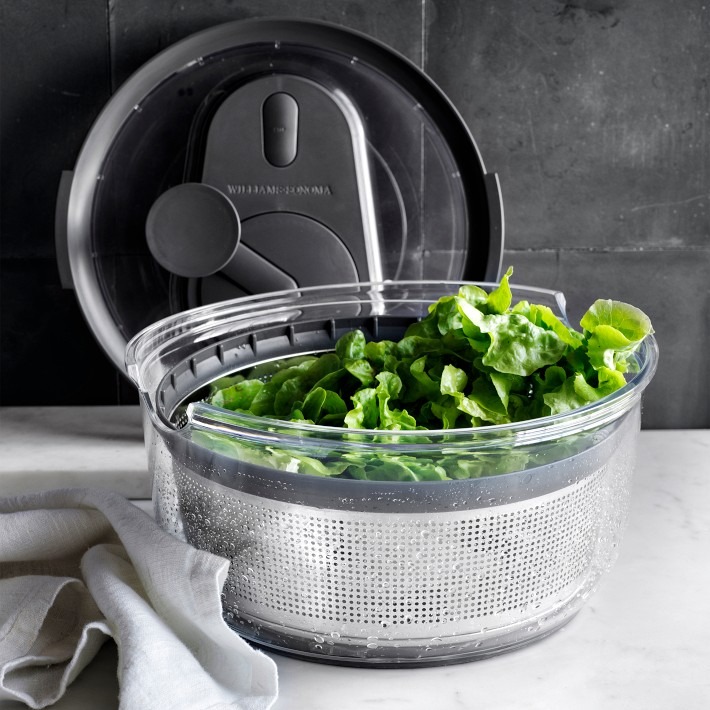
What Exactly is an Industrial Salad Spinner?
At its core, an industrial salad spinner is a specialized piece of commercial kitchen equipment designed to quickly and effectively remove excess water from washed leafy greens, herbs, and other vegetables. Unlike its smaller household counterparts, it’s built for durability, high capacity, and continuous operation, making it an indispensable asset in any professional setting. This isn’t just about drying; it’s about optimizing produce for taste, texture, and longevity.
Key Components of an Industrial Salad Spinner
An industrial salad spinner typically consists of a few crucial parts that work in harmony:
- Outer Bowl (or Housing): This robust exterior contains the entire spinning mechanism and collects the water removed from the produce. In industrial models, this is often made from durable plastic or stainless steel, designed for heavy use and easy cleaning.
- Inner Basket (or Colander): Perforated to allow water to escape, this basket holds the greens. It’s designed to be easily removable for loading, unloading, and cleaning. The material is crucial for food safety and durability, often stainless steel or food-grade polyethylene.
- Lid with Drive Mechanism: The lid secures the contents during operation. It houses the manual crank or, more commonly in industrial settings, the electric motor that powers the spinning action. Many industrial lids are transparent, allowing chefs to monitor the drying process.
- Drainage System: Essential for high-volume use, industrial models often feature a dedicated drain insert or a hose connection to efficiently channel away the collected water, preventing it from re-wetting the greens and streamlining workflow.
- Stabilizing Base and Casters: Given their size and the forces involved, a stable base is critical. Many larger industrial salad spinners are equipped with locking casters, making them easy to move for cleaning or storage while ensuring stability during operation.
How It Works: The Science of Centrifugal Force
The magic behind an industrial salad spinner lies in the simple yet powerful principle of centrifugal force. Once washed greens are placed in the inner basket and the lid is secured, the basket is set into rapid rotation. As the basket spins, the centrifugal force pushes the water clinging to the leaves outward, through the perforations of the basket, and down into the outer bowl.
This high-speed rotation effectively “flings” the water off the produce without damaging delicate leaves, leaving them perfectly dry and crisp. The force is strong enough to remove a significant amount of moisture, but gentle enough to preserve the integrity and texture of even the most fragile herbs. It’s a marvel of engineering that optimizes freshness and prepares greens for optimal dressing adhesion.
Why Every Commercial Kitchen Needs an Industrial Salad Spinner
For any food service operation dealing with fresh produce, an industrial salad spinner isn’t merely a luxury; it’s a fundamental investment that pays dividends in quality, efficiency, and cost savings.
Enhanced Efficiency and Speed
Imagine trying to hand-dry hundreds of pounds of lettuce for a busy dinner service. It’s an insurmountable task. An industrial salad spinner drastically cuts down preparation time. What once took multiple staff members precious minutes can now be accomplished in just 1-3 minutes per batch, depending on the model and capacity. This frees up kitchen staff to focus on other critical tasks, streamlining workflow and increasing overall productivity. For operations with high output, this efficiency is invaluable.
Superior Produce Quality and Shelf Life
Soggy greens are the bane of any salad lover. Excess water dilutes dressings, makes lettuce wilt faster, and detracts from the overall dining experience. An industrial salad spinner ensures greens are perfectly dry, allowing dressings to cling beautifully and flavors to shine. More importantly, removing excess moisture significantly extends the shelf life of washed produce. By eliminating the damp environment where bacteria can thrive, greens stay crisp and fresh for days longer, reducing spoilage and waste.
“A perfectly dry green isn’t just about taste; it’s about making your ingredients last longer and improving food safety,” says Chef Julian Abbott, a renowned culinary consultant specializing in kitchen operations. “An industrial salad spinner is a silent hero in preserving the integrity of fresh produce.”
Cost Savings and Reduced Waste
The benefits of dry greens extend directly to your bottom line. When greens are thoroughly spun, salad dressings adhere better, meaning you use less dressing per serving. Over time, these small savings accumulate into substantial cost reductions. Furthermore, by extending the shelf life of your produce, an industrial salad spinner dramatically reduces spoilage and food waste, leading to further savings on ingredient costs. It’s a smart investment that directly impacts profitability.
Food Safety and Hygiene
Food safety is non-negotiable in any commercial kitchen. Washing produce is crucial, but removing the residual water is equally important. Excess moisture can promote bacterial growth, increasing the risk of foodborne illnesses. An industrial salad spinner provides a hygienic solution for drying large quantities of greens without excessive manual handling, minimizing contamination risks and ensuring your produce meets stringent health standards. Many models are NSF-certified, attesting to their suitability for food service environments.
Choosing the Right Industrial Salad Spinner for Your Business
Selecting the ideal industrial salad spinner involves careful consideration of your kitchen’s specific needs, volume, and operational style. It’s not a one-size-fits-all decision, but rather about matching the right tool to your unique demands.
Capacity and Size Considerations
The most critical factor is capacity. Industrial salad spinners range from smaller 2.5-gallon units (drying around 4 heads of lettuce) to massive models capable of handling 20+ gallons or up to 720 kg/h of produce (e.g., Sammic ES-200 with 12 kg/26 lb capacity per cycle).
- Small to Medium Operations: Cafes, small restaurants, or specialty food shops might find a 5-10 gallon spinner sufficient.
- High-Volume Establishments: Large restaurants, hotels, catering companies, or institutional kitchens will require 15-20 gallon units or even larger, electric-powered models with high throughput.
- Space: Also consider the physical footprint. Ensure the spinner fits comfortably within your kitchen layout, especially if it’s a floor model on casters.
Material and Durability
Commercial kitchens are tough environments, so durability is key.
- Stainless Steel: Often preferred for its resistance to corrosion, rust, and heavy use. It’s also exceptionally easy to clean and sanitize, making it a hygienic choice.
- Heavy-Duty Plastic/Polyethylene: While lighter and sometimes more budget-friendly, ensure it’s food-grade and thick enough to withstand continuous commercial use without cracking or degrading.
- Lids: Look for transparent, heavy-duty lids for monitoring, ideally with a self-opening mechanism and safety device.
Power and Speed Settings
Industrial salad spinners typically come in two main power types:
- Manual: Hand-cranked models are generally smaller and more affordable. They require more effort but offer precise control and are suitable for lower-volume needs or as a backup.
- Electric: The workhorse of high-volume kitchens. Electric spinners offer consistent, powerful rotation, typically at high speeds (e.g., 406 RPM for Hobart, 900 RPM for Sammic), dramatically reducing labor. Many advanced models feature electronic speed variators and cycle selection for optimal drying of various produce types.
Ease of Cleaning and Maintenance
Hygiene is paramount. Choose an industrial salad spinner with components that are easy to disassemble, clean, and sanitize. Removable inner baskets are standard, and ideally, these should be dishwasher-safe. Look for smooth surfaces and minimal crevices where food particles can get trapped. Models with dedicated drain hoses make water disposal effortless, contributing to a cleaner, more efficient workspace.
Beyond Just Salad: Innovative Uses for Your Industrial Spinner
While its primary role is in preparing leafy greens, the versatility of an industrial salad spinner extends far beyond traditional salads. Creative chefs and efficient kitchen managers have discovered numerous other applications, maximizing the value of this workhorse equipment.
- Drying Fresh Herbs: Delicate herbs like cilantro, parsley, or basil can be quickly and gently dried after washing, preventing wilting and preserving their vibrant flavor.
- Draining Blanched Vegetables: After blanching vegetables like green beans, broccoli, or asparagus, a quick spin can remove excess water, ensuring they retain their crisp texture and aren’t watery in subsequent preparations.
- Drying Berries: For fruit tarts or garnishes, berries need to be dry to prevent sogginess. A gentle spin can dry them without bruising.
- Removing Excess Oil from Fried Foods: Some chefs use salad spinners to remove excess oil from lightly fried items, leading to a crispier, less greasy product. This is a niche application but highlights the principle of separation.
- Washing and Drying Small Root Vegetables: While larger root vegetables might be too heavy, smaller ones like radishes or baby carrots can be effectively washed and then spun dry.
The key is the gentle yet powerful centrifugal force, making the industrial salad spinner a multi-functional tool for various produce preparation tasks.
Maintaining Your Investment: Cleaning and Care Tips
To ensure your industrial salad spinner remains a reliable cornerstone of your kitchen for years to come, proper cleaning and maintenance are essential. Neglecting these steps can lead to decreased performance, hygiene issues, and a shorter lifespan for the equipment.
- Immediate Cleaning After Each Use: Don’t let food particles dry and harden. Immediately after use, empty the outer bowl of water and remove the inner basket.
- Disassemble Components: For thorough cleaning, disassemble all removable parts (inner basket, lid, drain insert if applicable).
- Wash with Warm, Soapy Water: Hand wash all components using warm water and a mild, food-safe detergent. Pay close attention to any crevices or hard-to-reach areas. A soft brush can be helpful for perforated baskets.
- Rinse Thoroughly: Rinse all parts under clean running water to remove all soap residue.
- Sanitize: In a commercial kitchen, sanitizing is crucial. Use an approved food-grade sanitizer according to the manufacturer’s instructions. Ensure proper contact time.
- Air Dry Completely: Allow all components to air dry completely before reassembling or storing. This prevents water spots and inhibits bacterial growth.
- Wipe Down Exterior: Wipe the exterior housing of the industrial salad spinner with a damp cloth and sanitizer, then dry it.
- Inspect Regularly: Periodically inspect the spinner for any signs of wear and tear, especially on moving parts, seals, and the lid mechanism. Address any issues promptly.
- Lubrication (Manual Models): For manual spinners, check the manufacturer’s recommendations for lubricating gears to ensure smooth operation.
By adhering to these simple cleaning and maintenance practices, you’ll extend the life of your industrial salad spinner, ensure food safety, and maintain peak operational efficiency.
Frequently Asked Questions About Industrial Salad Spinners
Q1: What is the main difference between a home and an industrial salad spinner?
A1: The primary differences are capacity, durability, and power. An industrial salad spinner is built for high-volume, continuous use in commercial settings, often with electric motors, larger capacities (gallons/kilograms), and more robust materials like stainless steel, unlike smaller, manual home versions.
Q2: How does an industrial salad spinner improve food safety?
A2: By efficiently removing excess water from washed greens, an industrial salad spinner reduces the moist environment where bacteria can rapidly multiply. This step is crucial in preventing foodborne illnesses and ensuring produce is hygienically prepared.
Q3: Can an industrial salad spinner dry delicate herbs without bruising them?
A3: Yes, many industrial salad spinners, especially those with variable speed settings or gentle spin cycles, are designed to dry delicate herbs and leafy greens effectively without causing damage or bruising, preserving their texture and appearance.
Q4: Are electric industrial salad spinners more expensive than manual ones?
A4: Generally, yes. Electric industrial salad spinners typically have higher upfront costs due to their motors, advanced features, and larger capacities. However, their efficiency and labor-saving benefits often result in significant long-term cost savings for high-volume operations.
Q5: How much capacity do I need for my restaurant?
A5: The ideal capacity depends on your operation’s volume. A small cafe might manage with a 5-gallon unit, while a bustling restaurant or catering service may need a 15-20 gallon capacity or even a model rated for hundreds of kilograms per hour to keep up with demand.
Q6: Can I use an industrial salad spinner for things other than lettuce?
A6: Absolutely! Beyond leafy greens, an industrial salad spinner is excellent for drying fresh herbs, blanched vegetables, and even berries, making it a versatile tool for various kitchen tasks that require water removal.
Q7: How often should I clean my industrial salad spinner?
A7: For optimal hygiene and performance, an industrial salad spinner should be thoroughly cleaned and sanitized after each use, especially when processing different types of produce, to prevent cross-contamination and bacterial growth.
The Future of Fresh: Embracing the Industrial Salad Spinner
In the demanding world of commercial cuisine, every second and every ingredient counts. The industrial salad spinner stands as a testament to innovation, offering a powerful solution to a common culinary challenge: achieving perfectly dry, crisp greens every single time. From enhancing food safety and extending shelf life to dramatically boosting kitchen efficiency and cutting costs, its benefits are undeniable.
For “SaladPro Innovations,” embracing and championing the industrial salad spinner isn’t just about selling equipment; it’s about empowering chefs and kitchen professionals to elevate their craft, streamline their operations, and consistently deliver the highest quality produce to their customers. If you haven’t yet integrated this vital tool into your kitchen, now is the time to experience the revolution of crispness and efficiency. Invest in an industrial salad spinner and watch your produce—and your business—thrive.