Ever wondered how top restaurants consistently serve those perfectly crisp, vibrant salads that just make your taste buds sing? The secret often lies with an unsung hero of the professional kitchen: the commercial salad spinner. This isn’t just a bigger version of your home kitchen gadget; it’s a robust, high-performance workhorse designed to transform leafy greens, ensuring every salad is a masterpiece of freshness and flavor. For any food service operation, from bustling diners to elegant catering services, mastering the art of dry greens is paramount, and a commercial salad spinner makes it effortlessly achievable.
|
Our Picks for the Best Salad Spinner in 2026
As an Amazon Associate I earn from qualifying purchases.
|
||
| Num | Product | Action |
|---|---|---|
| 1 | OXO Good Grips Salad Spinner | Lettuce Spinner | Fruit Washer | Fruit Washing Bowl with Strainer | Vegetable Cleaner | Salad Cleaner | Lettuce Washer | 6.22 Quart Capacity |

|
| 2 | Farberware Easy to use pro Pump Spinner with Bowl, Colander and Built in draining System for Fresh, Crisp, Clean Salad and Produce, 6.6 quart, Green |
|
| 3 | Cambom Salad Spinner Lettuce Spinner, Wash, Spin & Dry Salad Greens, Vegetable Washer Salad Dryer With Rotary Handle for Fruits & Vegetables, High Efficiency Vegetable Spinner Kitchen Gadget 3Qt Black |
|
| 4 | Automatic Vegetable and Fruit Washer Snail-Shaped Drain Basket 2025 New Washer Spinner Bowls, Portable Drainer Fruits Washing Basin for Home Kitchen (Yellow) |
|
| 5 | lily&stone Large Stainless Steel Pump Salad Spinner with Drain, Bowl, and Colander - Quick and Easy Multi-Use Lettuce Spinner, Vegetable Dryer, Fruit Washer, Pasta and Fries Spinner - 6.33 Qt |
|
| 6 | Cuisinart Large Spin Stop Salad Spinner- Wash, Spin & Dry Salad Greens, Fruits & Vegetables, 5qt, CTG-00-SAS1 |
|
| 7 | Stainless Steel Salad Spinner Large with 5 Blades Slicer, Lettuce Washer Spinner and Dryer, Vegetable Fruits Chopper Bowl, Egg Yolk Strainer Comes with Dipping Saucers and Clip, 5.3Qt |
|
| 8 | Bentgo Glass All-in-One Salad Container - Large 61-oz Salad Bowl with Lid, 4-Compartment Bento-Style Tray, 3-oz Sauce Container, and Reusable Fork - Dishwasher, Microwave, and Oven Safe (White) |
|
| 9 | Cuisinart Salad Spinner- Wash, Spin & Dry Salad Greens, Fruits & Vegetables, 3qt, CTG-00-SSAS |
|
| 10 | Salad Spinner Large 5L Capacity, Easy to Clean Lettuce Spinner with Bowl, Vegetable Washer Dryer Dishwasher Safe Ideal for Vegetables and Fruits without BPA, Large 4.5 Quart |
|
The Journey of Crispness: A Brief History of Salad Spinners
While the concept of drying greens isn’t new – our ancestors likely shook leafy greens vigorously or used cloth bags – the modern salad spinner as we know it emerged in the early 1970s. Initially designed for home use, these early models were often simple hand-cranked devices. However, as the demand for fresh, appealing salads grew in the culinary world, so did the need for more efficient, high-capacity solutions. This paved the way for the development of the commercial salad spinner, engineered to meet the rigorous demands of professional kitchens. These machines evolved to offer greater durability, capacity, and diverse operating mechanisms, moving beyond simple plastic and hand-cranks to incorporate sturdy materials and electric power, fundamentally changing how establishments prepare their greens.
Beneath the Spin: How a Commercial Salad Spinner Works
At its core, a commercial salad spinner operates on a fascinating scientific principle: centrifugal force. Imagine a fairground ride that spins rapidly, pushing its occupants firmly against the outer wall – that’s centrifugal force in action! A commercial salad spinner functions much the same way, but for your lettuce.
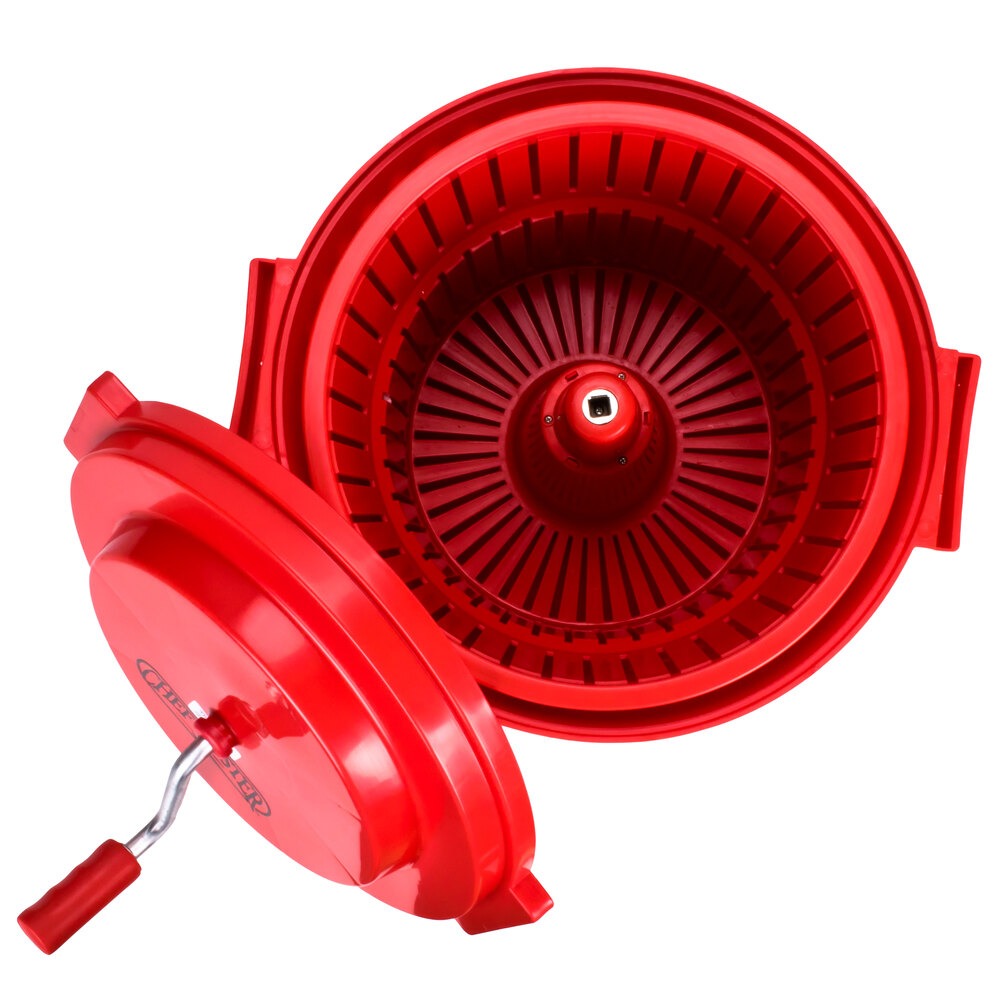
The device typically consists of three main parts: an outer bowl, an inner, perforated basket (or colander), and a lid equipped with a spinning mechanism. After washing, greens are placed in the inner basket. When the mechanism is activated, the basket rotates at high speed. This rapid rotation generates centrifugal force, pushing the water clinging to the leaves through the holes in the inner basket and into the outer bowl, leaving the greens remarkably dry.
Commercial models come with various operational mechanisms. You’ll find robust manual versions, often with a powerful crank or a pump-action handle, designed for reliability and ease of use in smaller to medium-volume settings. For larger operations, electric salad spinners offer unparalleled efficiency. With the push of a button, a motor takes over, spinning vast quantities of greens in seconds, freeing up kitchen staff for other critical tasks. This fundamental design, coupled with commercial-grade construction, ensures that regardless of the mechanism, the outcome is consistently dry, ready-to-use greens.
The Unsung Hero: Benefits of a Commercial Salad Spinner in Food Service
A commercial salad spinner isn’t just a convenience; it’s a strategic investment that delivers a multitude of benefits to any food service establishment.
Enhanced Food Safety
In the fast-paced environment of a professional kitchen, food safety is non-negotiable. Excess moisture on salad greens can create a breeding ground for bacteria, increasing the risk of foodborne illnesses. A commercial salad spinner thoroughly removes this excess water, significantly reducing the potential for bacterial growth and helping to ensure that the greens served are not only delicious but also safe for consumption. This proactive approach to hygiene protects your customers and your establishment’s reputation.
Superior Salad Quality
No one enjoys a soggy salad. Wet greens repel dressing, leading to a bland, diluted experience. By ensuring perfectly dry leaves, a commercial salad spinner allows dressings to cling beautifully, enhancing flavor, texture, and overall presentation. Crisp, fresh greens make for a more satisfying crunch and a visually appealing dish, elevating the customer experience and leaving a lasting positive impression.
Time and Labor Efficiency
Manual drying methods, such as patting greens with towels, are incredibly time-consuming and labor-intensive, especially when preparing salads in high volumes. A commercial salad spinner dramatically streamlines this process, allowing kitchen staff to dry large quantities of lettuce and other vegetables in a fraction of the time. This efficiency is crucial during peak hours, speeding up prep time, improving kitchen workflow, and ultimately reducing labor costs, allowing your team to focus on other culinary tasks.
Cost-Effectiveness
Beyond efficiency, a commercial salad spinner contributes directly to your bottom line. Dry greens absorb dressing more effectively, meaning you use less dressing per salad, leading to significant savings over time. Furthermore, properly dried greens stay fresh longer, reducing spoilage and waste. This extended shelf life for produce translates into fewer discarded ingredients and more profitable operations.
Versatility Beyond Greens
While its name suggests a singular purpose, a commercial salad spinner is surprisingly versatile. It can be used to dry a variety of ingredients beyond just leafy greens, including fresh herbs, berries, and even certain types of pasta or vegetables after blanching. This multi-functionality makes it an even more valuable tool, maximizing its utility in a busy kitchen.
Choosing the Right Commercial Salad Spinner for Your Operation
Selecting the ideal commercial salad spinner involves considering several key factors tailored to your establishment’s specific needs.
Capacity and Size
The volume of salads you prepare daily dictates the capacity you’ll require. Small cafes might find a 2.5 to 5-gallon manual spinner sufficient, while large restaurants or catering services handling hundreds of servings may need a 10 to 20-gallon electric model. Overloading a spinner reduces its effectiveness, so choosing a capacity that comfortably accommodates your busiest periods is crucial.
Power Type: Manual vs. Electric
Manual commercial salad spinners, often operated by a hand crank or pump, are excellent for smaller operations or for establishments that prioritize durability and simplicity. They are typically more budget-friendly and require no electrical outlet. Electric commercial salad spinners, on the other hand, are designed for high-volume efficiency. They minimize manual effort, allowing staff to multitask, but require a power source and a larger initial investment.
Material and Build Quality
Commercial kitchen equipment must withstand heavy use. Look for spinners made from durable materials like robust plastics (polycarbonate, polyethylene), or stainless steel. Stainless steel models offer superior corrosion resistance and hygiene, while high-quality plastics are often lighter and impact-resistant. The construction should be sturdy, ensuring stability during operation and longevity.
Key Features
Consider features that enhance usability and hygiene. Models with integrated drainage hoses allow for continuous water removal without interrupting the spinning process. Non-slip bases or feet ensure stability. Easy assembly and disassembly are vital for thorough cleaning. Some advanced models may include deceleration devices for a controlled stop or specialized components for even more efficient drying.
Effective Usage: Getting the Most Out of Your Commercial Salad Spinner
To maximize the benefits of your commercial salad spinner, follow these simple yet effective usage tips:
- Prep Your Greens: Before spinning, wash your greens thoroughly under cold water. You can even do this directly in the inner basket of some spinners. Remove any damaged leaves or large stems.
- Don’t Overload: While commercial spinners boast high capacities, avoid overfilling the basket. Overloading can hinder the centrifugal force, leaving greens wetter and potentially damaging the spinner. Spin in batches if necessary.
- Spin Appropriately: For most leafy greens, 10-20 seconds of spinning is usually sufficient. Delicate herbs or sprouts might require less time and a gentler spin. If greens still appear wet, simply repeat the process.
- Empty Excess Water: Regularly empty the outer bowl of accumulated water between batches or as it fills up. This ensures the spinner can continue to effectively remove moisture.
Cleaning and Maintenance: Keeping Your Spinner Pristine and Hygienic
Proper cleaning and maintenance are essential for extending the lifespan of your commercial salad spinner and upholding the highest hygiene standards.
- Disassemble: Most commercial spinners are designed for easy disassembly. Separate the lid, inner basket, and outer bowl according to the manufacturer’s instructions.
- Hand Wash Components: While some plastic components might be dishwasher safe, it’s generally recommended to hand wash the lid and other intricate parts with warm, soapy water and a gentle brush. Pay close attention to crevices and openings where water or debris might get trapped. For stainless steel parts, use food-grade sanitizers.
- Rinse Thoroughly: Rinse all components thoroughly to remove any soap residue.
- Sanitize: Regular sanitization is crucial in a commercial setting to prevent the spread of foodborne pathogens. Use an approved food-safe sanitizer on all surfaces that come into contact with food.
- Air Dry Completely: This is a critical step often overlooked. Allow all parts to air dry completely before reassembling and storing. Trapped moisture can lead to mold or mildew growth.
- Store Properly: Store the clean, dry spinner in a clean, dry area, ideally unassembled or with components slightly separated to allow for airflow.
- Inspect Regularly: Periodically inspect the spinner for any signs of wear, cracks, or damage, especially on moving parts of manual models or electrical components of electric ones. Replace worn parts promptly to maintain optimal performance and safety.
“A perfectly dry green isn’t just about presentation; it’s about flavor integrity and food safety. In a professional kitchen, a robust commercial salad spinner isn’t a luxury, it’s an absolute necessity,” says Chef Amelia Rossi, a seasoned culinary operations consultant. “It’s a foundational tool that elevates the entire salad program, ensuring every dish meets the highest standards of quality and efficiency.”
Conclusion
The commercial salad spinner is far more than a simple kitchen gadget; it is an indispensable piece of equipment for any food service operation committed to quality, efficiency, and food safety. By harnessing the power of centrifugal force, these robust machines ensure perfectly crisp, dry greens that enhance flavor, extend freshness, and allow dressings to adhere beautifully. From boosting kitchen productivity and reducing labor costs to minimizing waste and safeguarding customer health, the benefits are undeniable. Investing in a high-quality commercial salad spinner is a strategic decision that promises to elevate your culinary offerings, streamline your operations, and leave your patrons savoring every perfectly prepared bite. Embrace the power of dry greens and watch your salad service—and your business—flourish.