Before the sleek lines and effortless pump mechanisms of contemporary kitchen gadgets graced our countertops, there was the Copco salad spinner. A true icon of its era, this device wasn’t just a tool; it was a cornerstone in countless kitchens, a testament to the simple yet crucial act of preparing fresh, crisp salads. For “SaladPro Innovations,” understanding this foundational piece of culinary history is key to appreciating the journey of salad preparation and defining the future of kitchen convenience.
|
Our Picks for the Best Salad Spinner in 2026
As an Amazon Associate I earn from qualifying purchases.
|
||
| Num | Product | Action |
|---|---|---|
| 1 | Automatic Vegetable and Fruit Washer Snail-Shaped Drain Basket 2025 New Washer Spinner Bowls, Portable Drainer Fruits Washing Basin for Home Kitchen (Yellow) |

|
| 2 | lily&stone Large Stainless Steel Pump Salad Spinner with Drain, Bowl, and Colander - Quick and Easy Multi-Use Lettuce Spinner, Vegetable Dryer, Fruit Washer, Pasta and Fries Spinner - 6.33 Qt |
|
| 3 | OXO Good Grips Salad Spinner | Lettuce Spinner | Fruit Washer | Fruit Washing Bowl with Strainer | Vegetable Cleaner | Salad Cleaner | Lettuce Washer | 6.22 Quart Capacity |
|
| 4 | Cuisinart Large Spin Stop Salad Spinner- Wash, Spin & Dry Salad Greens, Fruits & Vegetables, 5qt, CTG-00-SAS1 |
|
| 5 | Bentgo Glass All-in-One Salad Container - Large 61-oz Salad Bowl with Lid, 4-Compartment Bento-Style Tray, 3-oz Sauce Container, and Reusable Fork - Dishwasher, Microwave, and Oven Safe (White) |
|
| 6 | Stainless Steel Salad Spinner Large with 5 Blades Slicer, Lettuce Washer Spinner and Dryer, Vegetable Fruits Chopper Bowl, Egg Yolk Strainer Comes with Dipping Saucers and Clip, 5.3Qt |
|
| 7 | Cambom Salad Spinner Lettuce Spinner, Wash, Spin & Dry Salad Greens, Vegetable Washer Salad Dryer With Rotary Handle for Fruits & Vegetables, High Efficiency Vegetable Spinner Kitchen Gadget 3Qt Black |
|
| 8 | Salad Spinner Large 5L Capacity, Easy to Clean Lettuce Spinner with Bowl, Vegetable Washer Dryer Dishwasher Safe Ideal for Vegetables and Fruits without BPA, Large 4.5 Quart |
|
| 9 | Cuisinart Salad Spinner- Wash, Spin & Dry Salad Greens, Fruits & Vegetables, 3qt, CTG-00-SSAS |
|
| 10 | Farberware Easy to use pro Pump Spinner with Bowl, Colander and Built in draining System for Fresh, Crisp, Clean Salad and Produce, 6.6 quart, Green |
|
The Enduring History and Evolution of the Salad Spinner
The concept of a salad spinner—using centrifugal force to banish excess water from leafy greens—isn’t a new phenomenon. While earlier, more rudimentary devices existed, the modern salad spinner truly emerged as a household staple in the 1970s. It was a time when home cooking was embracing efficiency, and the quest for perfectly dry lettuce, free from grit and grime, became a small but significant culinary pursuit.
Amidst this burgeoning market, the Copco salad spinner carved out its niche. Often recognized by its “Vintage Copco Design Model Sam Lebowitz 604 USA Made” designation, it became synonymous with a particular aesthetic and a reliable, if sometimes quirky, functionality [search 1, browse 1]. Designed by Sam Lebowitz, these spinners, frequently spotted in white, vibrant orange, or classic red, were more than just appliances; they were pieces of 1970s and 1980s kitchen design, often considered “vaguely Danish” in their minimalist, functionalist approach [browse 1, browse 2, browse 3]. For many, the Copco spinner wasn’t just a kitchen tool; it was a memory, a fixture of childhood kitchens, evoking a sense of nostalgia for a simpler time when hand-cranked gadgets reigned supreme.
Defining the “Salad Spinner”: From Classic Charm to Modern Innovation
What truly defines a salad spinner, whether it’s a vintage Copco salad spinner or a state-of-the-art model from SaladPro Innovations, is its fundamental purpose: delivering perfectly clean and dry greens. This allows dressings to adhere beautifully, enhancing flavor and texture without dilution.
The early Copco models, with their distinctive crank handles, set the standard for generations, proving the utility of this kitchen essential [search 1, browse 1]. Yet, as culinary design evolved, so too did the expectations for ease and efficiency. Modern spinners have innovated beyond the crank, introducing pump-style and pull-cord mechanisms that often offer smoother operation, superior drying capabilities, and convenient features like integrated brake buttons for instant stopping [search 2, search 3, search 4, search 5, browse 1].
At “SaladPro Innovations,” we recognize that the spirit of durability and functional design embodied by brands like Copco continues to inspire. However, our focus is on refining these principles with contemporary materials, ergonomic design, and advanced mechanisms to offer an unparalleled user experience. We aim for products that are not only effective but also intuitive, stable, and a pleasure to use, building on the legacy of foundational designs while addressing the minor frustrations sometimes associated with older models, such as the tendency for units to shake or lids to be tricky to secure [browse 1].
Construction and Core Mechanism of a Salad Spinner
At its heart, any salad spinner, including the classic Copco salad spinner, operates on the principle of centrifugal force. This clever design typically consists of three main components:
- An outer bowl: This serves as the basin for collecting water expelled from the greens.
- An inner colander or strainer basket: This holds the greens and is designed with perforations to allow water to pass through.
- A lid with a spinning mechanism: This crucial part creates the centrifugal force.
In the case of the Copco salad spinner, the mechanism was famously a crank handle [search 1, browse 1]. Turning this handle manually rotated the inner basket at high speeds. The water, being denser than the lettuce leaves, was forced outwards through the basket’s perforations and collected in the outer bowl. While effective, this manual crank could sometimes lead to the entire unit vibrating or moving across the countertop, requiring a steady hand to operate effectively [browse 1].
Today, SaladPro Innovations’ designs often feature more advanced mechanisms, such as easy-to-use push-button pumps or pull-cord systems, which activate rapid spinning with minimal effort and improved stability, often coupled with a brake button for precise control [search 2, search 4, browse 1]. These advancements ensure a smoother, quieter operation, reflecting a commitment to enhancing the user experience.
Mastering Your Salad Spinner: An Effective Use Guide
Whether you’re using a cherished vintage Copco salad spinner or a cutting-edge model from SaladPro Innovations, the goal remains the same: impeccably clean and dry greens. Here’s how to achieve that:
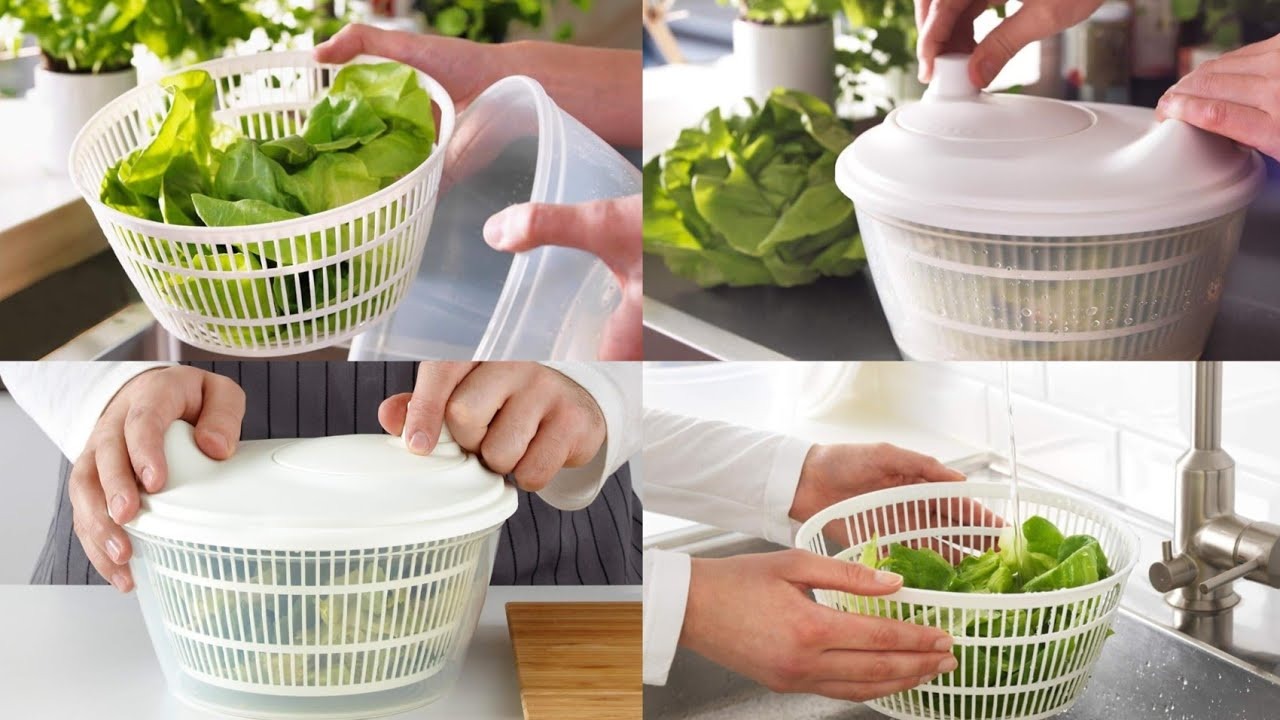
- Rinse Thoroughly: Place your leafy greens, herbs, or small fruits in the inner colander. Rinse them under cool running water, ensuring all visible dirt and debris are removed. You can even soak them briefly in the outer bowl if they’re particularly sandy.
- Load Smartly: Avoid overfilling the basket. For optimal drying, greens should have enough space to move freely. Overloading can reduce efficiency and potentially damage delicate leaves.
- Spin Away:
- For a crank-style spinner like the Copco, secure the lid and turn the crank briskly and steadily.
- For pump-style models, press the pump repeatedly until the basket reaches a good speed.
- For pull-cord models, pull the cord to initiate spinning.
- Check and Repeat: After spinning for about 10-20 seconds, check the greens. If they still feel damp or if there’s more water in the outer bowl, empty the water and spin again. Delicate herbs might require a gentler touch or fewer spins.
- Enjoy: Once your greens are perfectly dry, they are ready for dressing, ensuring every bite is crisp and flavorful.
“A key to truly vibrant salads,” advises Chef Marcus Thorne, a culinary design consultant for SaladPro Innovations, “is the dryness of your greens. Even a hint of moisture can dilute your dressing. A well-used spinner, whether it’s a nostalgic classic or a modern marvel, is an indispensable ally in achieving this.”
Beyond Lettuce: Clever Tips and Other Uses for Your Salad Spinner
While the Copco salad spinner earned its reputation primarily for drying lettuce, its utility extends far beyond just leafy greens. Modern spinners from SaladPro Innovations continue this tradition of versatility:
- Herbs and Berries: Gently spin delicate herbs like cilantro or parsley, and even small berries like blueberries or raspberries, to remove excess water without bruising them.
- Washing Vegetables: Use the basket to rinse chopped vegetables before cooking.
- Drying Pasta (Cool): If you’ve boiled pasta ahead of time and want to cool it quickly and prevent it from sticking, a quick spin in the colander can help remove surface moisture.
- Serving Bowl: The sturdy outer bowl, particularly with a clear design, often doubles as an attractive serving bowl for your freshly prepared salad.
- Washing Produce for Juicing/Smoothies: Ensure your fruits and vegetables are thoroughly cleaned before blending.
The Undeniable Benefits of a Salad Spinner in Food Preparation
Integrating a salad spinner, like the classic Copco salad spinner or the innovative designs from SaladPro Innovations, into your kitchen routine offers a cascade of benefits that elevate your culinary experience:
- Crispier, More Flavorful Salads: This is the primary and most celebrated advantage. By removing excess water, your salad dressing adheres directly to the leaves, rather than sliding off or becoming diluted. The result is a salad with superior texture and a more concentrated, enjoyable flavor.
- Enhanced Food Safety: Thoroughly washing and spinning greens helps to remove dirt, pesticides, and potential contaminants, contributing to healthier eating habits. “As nutritionist Dr. Alistair Finch notes, ‘A truly dry salad is a joy, and a quality spinner can elevate your entire meal by ensuring both cleanliness and optimal flavor absorption.'”
- Time and Effort Saver: While some vintage models required a bit more manual effort, a salad spinner is still significantly faster and more efficient than patting greens dry with paper towels, which can also bruise delicate leaves. Modern pump-action spinners are designed for near-instantaneous results.
- Reduced Food Waste: Crisp, dry greens last longer in the refrigerator, preventing premature wilting and reducing the need to discard unused produce.
- Versatility in the Kitchen: As discussed, its uses extend beyond just lettuce, making it a multi-functional tool for a variety of produce.
Cleaning and Maintaining Your Salad Spinner for Longevity
To ensure your salad spinner, whether it’s a treasured vintage Copco salad spinner or a contemporary model, continues to perform optimally and remains hygienic, proper cleaning and maintenance are essential.
- Disassemble for Deep Clean: Most salad spinners are designed to come apart easily. Separate the outer bowl, inner colander, and lid. Some lids might have a central mechanism that can be further dismantled for thorough cleaning, though this varies by design.
- Wash Promptly: After each use, rinse all components immediately to prevent food residue from drying and sticking. Use warm, soapy water and a soft brush or sponge. Pay particular attention to the lid mechanism, as water and bits of greens can sometimes get trapped.
- Dishwasher Compatibility: While many modern plastic and stainless steel spinners from brands like SaladPro Innovations are top-rack dishwasher safe, always check the manufacturer’s instructions. Older plastic models, like the Copco, might benefit from handwashing to preserve their integrity over time.
- Thorough Drying: Allow all parts to air dry completely before reassembling and storing. This prevents mildew growth and keeps your spinner fresh for its next use.
- Smart Storage: Salad spinners can be bulky. To optimize space, look for models with stackable designs or lids that lock down for compact storage. The simple, three-piece design of the original Copco spinners often made them relatively easy to stack.
Frequently Asked Questions About Salad Spinners
Q1: What is the primary benefit of using a salad spinner?
A1: The main benefit is achieving perfectly dry salad greens. This allows salad dressing to coat the leaves effectively without being diluted by residual water, leading to a crispier, more flavorful salad.
Q2: Can a Copco salad spinner still be used effectively today?
A2: Absolutely! While vintage Copco salad spinners might not have the advanced features of modern designs, their classic crank mechanism still effectively removes water, offering a reliable and nostalgic way to prepare greens.
Q3: Are there other uses for a salad spinner besides drying lettuce?
A3: Yes, salad spinners are versatile tools. They can be used to wash and dry herbs, berries, and other small vegetables. The outer bowl often doubles as a convenient serving bowl.
Q4: How do modern salad spinners differ from classic ones like Copco?
A4: Modern salad spinners, such as those from SaladPro Innovations, often feature pump-style or pull-cord mechanisms for easier and more efficient spinning, along with brake buttons for quick stopping, and sometimes improved stability compared to older crank-style models like the Copco.
Q5: How do I clean my salad spinner effectively?
A5: Disassemble all components (bowl, colander, lid) and wash them in warm, soapy water immediately after use. Many modern spinners are dishwasher safe, but vintage plastic models are often best hand-washed. Ensure all parts are thoroughly dried before storage to prevent mildew.
Cultivating Crispness: The Enduring Appeal of the Salad Spinner
From the classic, crank-operated Copco salad spinner that graced kitchens of yesteryear to the innovative, pump-action designs of today, the journey of this humble kitchen tool is a testament to our enduring desire for perfectly prepared, delicious salads. The Copco spinner, with its sturdy plastic build and straightforward mechanism, laid a vital foundation, proving the indispensable value of dry greens.
At “SaladPro Innovations,” we draw inspiration from such legacies, striving to refine and enhance the salad preparation experience. We aim to combine the celebrated durability and functional design principles of classics with cutting-edge technology and user-centric features. So whether you’re appreciating the vintage charm of a Copco or embracing the effortless efficiency of a SaladPro Innovations device, one thing remains clear: a quality salad spinner is more than just a gadget; it’s an invitation to a world of fresher, crispier, and more enjoyable meals. We encourage you to explore the benefits and elevate your salad game, transforming everyday greens into culinary delights.