In today’s fast-paced world, where kitchen space is often at a premium and healthy eating remains a top priority, the small salad spinner emerges as an indispensable kitchen tool. It’s more than just a gadget; it’s a game-changer for anyone looking to enjoy perfectly crisp salads without the fuss. This compact wonder ensures your greens are not just clean, but thoroughly dry, allowing dressings to cling beautifully and flavors to shine, transforming your daily meals with effortless efficiency.
|
Our Picks for the Best Salad Spinner in 2026
As an Amazon Associate I earn from qualifying purchases.
|
||
| Num | Product | Action |
|---|---|---|
| 1 | Cuisinart Salad Spinner- Wash, Spin & Dry Salad Greens, Fruits & Vegetables, 3qt, CTG-00-SSAS |

|
| 2 | Bentgo Glass All-in-One Salad Container - Large 61-oz Salad Bowl with Lid, 4-Compartment Bento-Style Tray, 3-oz Sauce Container, and Reusable Fork - Dishwasher, Microwave, and Oven Safe (White) |
|
| 3 | Salad Spinner Large 5L Capacity, Easy to Clean Lettuce Spinner with Bowl, Vegetable Washer Dryer Dishwasher Safe Ideal for Vegetables and Fruits without BPA, Large 4.5 Quart |
|
| 4 | Farberware Easy to use pro Pump Spinner with Bowl, Colander and Built in draining System for Fresh, Crisp, Clean Salad and Produce, 6.6 quart, Green |
|
| 5 | Automatic Vegetable and Fruit Washer Snail-Shaped Drain Basket 2025 New Washer Spinner Bowls, Portable Drainer Fruits Washing Basin for Home Kitchen (Yellow) |
|
| 6 | OXO Good Grips Salad Spinner | Lettuce Spinner | Fruit Washer | Fruit Washing Bowl with Strainer | Vegetable Cleaner | Salad Cleaner | Lettuce Washer | 6.22 Quart Capacity |
|
| 7 | lily&stone Large Stainless Steel Pump Salad Spinner with Drain, Bowl, and Colander - Quick and Easy Multi-Use Lettuce Spinner, Vegetable Dryer, Fruit Washer, Pasta and Fries Spinner - 6.33 Qt |
|
| 8 | Cambom Salad Spinner Lettuce Spinner, Wash, Spin & Dry Salad Greens, Vegetable Washer Salad Dryer With Rotary Handle for Fruits & Vegetables, High Efficiency Vegetable Spinner Kitchen Gadget 3Qt Black |
|
| 9 | Stainless Steel Salad Spinner Large with 5 Blades Slicer, Lettuce Washer Spinner and Dryer, Vegetable Fruits Chopper Bowl, Egg Yolk Strainer Comes with Dipping Saucers and Clip, 5.3Qt |
|
| 10 | Cuisinart Large Spin Stop Salad Spinner- Wash, Spin & Dry Salad Greens, Fruits & Vegetables, 5qt, CTG-00-SAS1 |
|
The Humble Beginnings: A Brief History of Salad Spinners
The concept of removing excess water from washed greens isn’t new. For centuries, cooks have sought methods to dry lettuce, from simple shaking in a cloth to more elaborate basket-swirling techniques. The modern salad spinner, as we know it, began to take shape in the late 20th century, revolutionizing kitchen prep. Initially, these devices were often large, designed for family-sized portions and taking up considerable counter space. However, as living spaces grew smaller and single-serving meals became more common, the demand for more compact, efficient solutions like the small salad spinner steadily increased. This evolution reflects a broader trend in kitchenware: smart, space-saving designs that cater to urban living and individual culinary needs, proving that great innovation can come in smaller packages.
Decoding the Mechanism: How a Small Salad Spinner Works
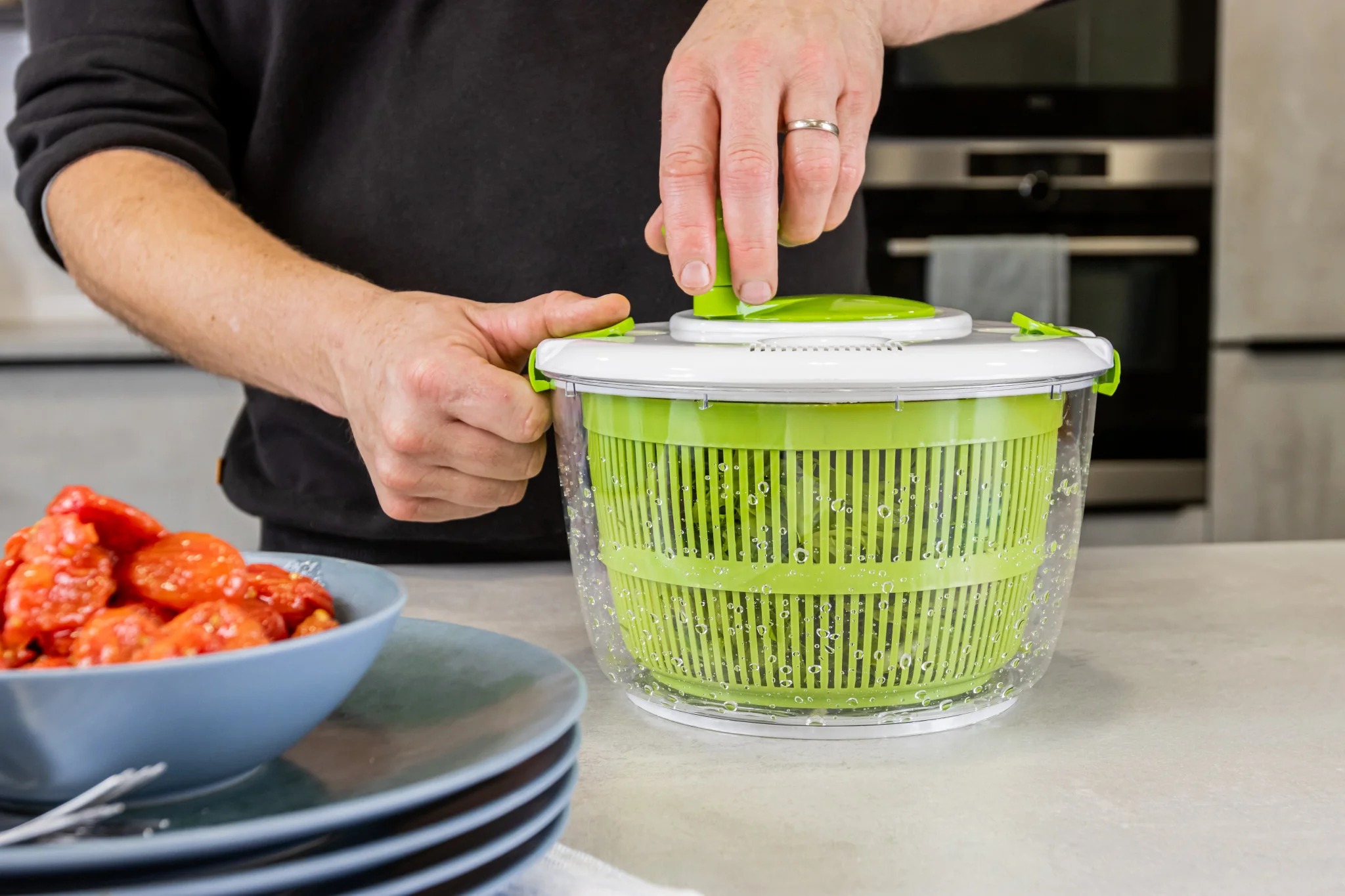
At its heart, a small salad spinner operates on the principle of centrifugal force, a fundamental concept in physics that makes drying greens remarkably efficient. Typically, the device consists of three main components: an outer bowl, an inner colander basket with perforations, and a lid equipped with a spinning mechanism. After you wash your greens and place them in the inner basket, you secure the lid. Engaging the mechanism—whether it’s a pump-action plunger, a crank handle, or a pull-cord—causes the inner basket to rotate rapidly. This spinning motion drives water droplets off the surface of the greens, through the holes in the basket, and into the stationary outer bowl. The result is thoroughly dry, undamaged greens, ready for your culinary creations. The brilliance lies in its simplicity and effectiveness, ensuring your salad isn’t watered down by residual moisture.
Why Go Small? The Undeniable Benefits of a Compact Salad Spinner
Choosing a small salad spinner offers a surprising array of advantages, especially for specific lifestyles and kitchen setups.
Perfect for Solo Diners and Small Households
If you often prepare meals for one or two people, a smaller spinner prevents food waste and makes portion control a breeze. It’s designed to handle individual servings of lettuce, a handful of herbs, or a pint of berries with maximum efficiency. “For those living alone or in smaller households, a compact salad spinner is a revelation,” notes Clara Jenkins, a renowned culinary efficiency expert. “It empowers you to enjoy fresh, clean produce daily without overwhelming your kitchen or your plate.”
Maximizing Counter and Cabinet Space
In compact kitchens, every inch counts. A small salad spinner is a champion of space efficiency. Its reduced footprint means it takes up less valuable counter real estate during use and can be tucked away easily into smaller cabinets or drawers when not in action. Some models even feature collapsible designs, further enhancing their space-saving appeal, making them an ideal choice for apartments, dorms, or RVs.
Beyond Greens: Versatile Uses for Your Mini Spinner
Don’t let the name fool you; a small salad spinner is a surprisingly versatile tool. While it excels at drying lettuce, its utility extends far beyond. You can use it to thoroughly wash and dry delicate herbs like cilantro or parsley, ensuring they retain their vibrant flavor and texture. It’s also fantastic for berries, preventing them from becoming mushy, and even for rinsing small batches of vegetables like broccoli florets or chopped cauliflower. The inner basket can often double as a standalone colander for straining pasta or canned goods, adding another layer of functionality to this humble gadget.
Getting Started: A Step-by-Step Guide to Using Your Small Salad Spinner
Using a small salad spinner is straightforward, but a few simple steps can maximize its effectiveness and ensure your greens are perfectly prepped every time.
Prepping Your Produce with Precision
Begin by separating your lettuce leaves or herbs and inspecting them for any wilted bits or imperfections. Place the greens into the inner colander basket. For best results, it’s often recommended to fill the outer bowl with cold water (some even add a few ice cubes for extra crispness) and submerge the basket with greens. Let them soak for a few minutes; this allows any dirt or debris to loosen and sink to the bottom of the bowl.
The Art of the Spin: Achieving Crisp Perfection
Once your greens have soaked, lift the inner basket out of the water, allowing excess water to drain through the perforations. Discard the dirty water from the outer bowl, then place the basket back inside. Secure the lid tightly. Now, engage the spinning mechanism. Whether it’s a vigorous pump, a smooth crank, or a quick pull-cord, spin your greens for about 10-15 seconds. The centrifugal force will work its magic, separating water from the leaves. Many models feature a convenient brake button to halt the spinning instantly.
When to Stop: Recognizing Dryness
After the initial spin, check the outer bowl for accumulated water. If there’s still a significant amount, you might want to repeat the spinning process. Your goal is to see minimal water collecting in the bowl and your greens appearing vibrant and dry, yet not overly jostled. Perfectly dry greens will feel lighter and have a noticeably crisper texture, signaling they are ready for dressing.
Keeping it Pristine: Cleaning and Maintenance for Longevity
Maintaining your small salad spinner properly ensures its longevity and hygiene.
Daily Rinse and Care
After each use, disassemble the spinner by removing the lid and the inner basket from the outer bowl. Rinse all three components thoroughly with warm, soapy water. Pay particular attention to the lid mechanism, as small food particles can sometimes get lodged in crevices. A quick rinse will usually suffice to keep it clean for daily use.
Deep Cleaning Tips
For a deeper clean, especially if you notice any residue or infrequent use, most modern salad spinners are designed with dishwasher-safe components, typically on the top rack. For manual cleaning, a small brush can help dislodge any stubborn bits from the basket’s holes or the lid’s gears. Ensure all parts are completely dry before reassembling or storing to prevent mildew or odors.
Choosing Your Champion: What to Look for in a Small Salad Spinner
Selecting the ideal small salad spinner involves considering several factors tailored to your needs and preferences.
Size and Capacity
While the focus is on “small,” capacities can still vary. A 2.5-quart (approximately 2.4 liters) basket is often considered ideal for individual portions or up to two servings. Assess how much greens you typically prepare to find a size that’s just right without being too bulky or too restrictive.
Spinning Mechanism: Pump, Crank, or Pull-Cord?
Different mechanisms offer varying user experiences. Pump-action spinners, often lauded for their one-handed operation and integrated brake buttons, are popular for their ease and efficiency. Crank-handle models provide a more traditional feel and good control, while pull-cord spinners are typically compact and quick. Test out different types if possible to see which feels most comfortable and intuitive for you.
Material Matters: Durability and Style
Most small salad spinners come in durable plastic, which is lightweight and often affordable. However, some higher-end models feature stainless steel bowls, offering enhanced durability, a more premium aesthetic, and the ability to double as a stylish serving bowl. Clear plastic bowls are advantageous as they allow you to monitor the drying process. Consider your kitchen’s aesthetic and your priority for durability versus cost.
Ease of Cleaning and Storage Features
Look for models with lids that easily disassemble for thorough cleaning, particularly if you prefer hand-washing. Dishwasher-safe components are a huge plus for convenience. For storage, collapsible designs or those with flat lids can be particularly appealing if cabinet space is extremely limited. A non-slip base is also a practical feature, preventing the spinner from sliding around during vigorous use.
Frequently Asked Questions About Small Salad Spinners
Q: Is a small salad spinner truly necessary for a small kitchen?
A: While not strictly “necessary” in the same way a knife or cutting board is, a small salad spinner is highly beneficial for small kitchens. It drastically improves the quality of your salads by thoroughly drying greens, prevents sogginess, and often offers compact storage solutions, making it a valuable addition to any space-conscious cook’s arsenal.
Q: Can I use my small salad spinner for things other than lettuce?
A: Absolutely! Small salad spinners are incredibly versatile. They are perfect for washing and drying fresh herbs, delicate berries, and even small quantities of other vegetables like chopped broccoli or cauliflower. Some people even use them to drain canned goods or remove excess water from ingredients like potatoes for hash browns.
Q: How do I store my greens after spinning them?
A: After spinning, your dry greens can be stored in an airtight container, or even in the spinner’s outer bowl covered with plastic wrap or its lid, in the refrigerator. Properly dried greens can stay fresh and crisp for several days, extending their shelf life and making meal prep easier throughout the week.
Q: What’s the best way to clean a small salad spinner?
A: The best way to clean your small salad spinner is to disassemble all its parts immediately after use and wash them with warm, soapy water. Many models are also top-rack dishwasher safe, offering a convenient cleaning option. Ensure all components are completely dry before storage to prevent mold or mildew.
Q: How much should I expect to pay for a quality small salad spinner?
A: Prices for quality small salad spinners typically range from $20 to $40, depending on the brand, materials (plastic vs. stainless steel), and specific features. Investing a little more often means better durability, more efficient spinning mechanisms, and easier cleaning.
A Spin Towards Smarter, Healthier Eating
The small salad spinner might seem like a modest kitchen tool, but its impact on preparing fresh, vibrant meals is anything but. From ensuring crisp, perfectly dressed salads to offering versatile cleaning capabilities for a range of produce, this compact innovation is a must-have for modern kitchens. It frees up precious space, streamlines your prep, and elevates your cooking, proving that even the simplest gadgets can make a world of difference. Embrace the spin, and discover the joy of truly fresh greens, every single time.